Why Real-World Disinfection Efficacy Testing is Needed
The Challenges of Disinfection Protocols and Real-World Conditions
Most facility managers and custodial workers want to maintain clean and hygienic environments. Unfortunately, this is harder to accomplish than you might expect. Disinfectant products have established protocols that must be followed to ensure successful disinfection. Often, improperly followed protocols or human error results in less than optimum results.
For example, the Association of Official Analytical Chemists (AOAC) Germicidal Spray Test methods that are commonly used for EPA registrations involve spraying a disinfectant on a test sample until thoroughly wet and leaving that sample exposed for the required contact time. In practice, achieving the required surface wetness and contact time can be challenging. Also, the AOAC spray test is a controlled test with few real-world environmental variables.
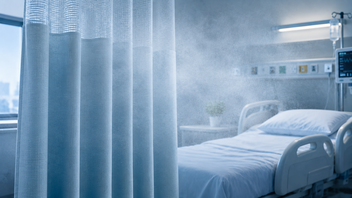
Aerosolized fog is an efficient method to dispense disinfectant within a typical room-sized space. And some aerosolized disinfectants can be applied in a dry fog that does not require saturation of the surfaces where pathogens reside. For these dry fog solutions, dosages and contact times will not match the AOAC spray test data and should be measured in true fogging tests. Also, real-world conditions such as room shape, air flow, surface types, density of surfaces, soil load, humidity, and temperature can also affect disinfection efficacy when fogging a disinfectant. (Note: spraying can also create aerosolized chemicals that might be inhaled by workers or visitors.)
Breezy Med's Approach to Effective Disinfection
Breezy Med combines automated aerosolized hydrogen peroxide disinfection, validated treatment protocols, and connected monitoring to support consistent environmental disinfection.
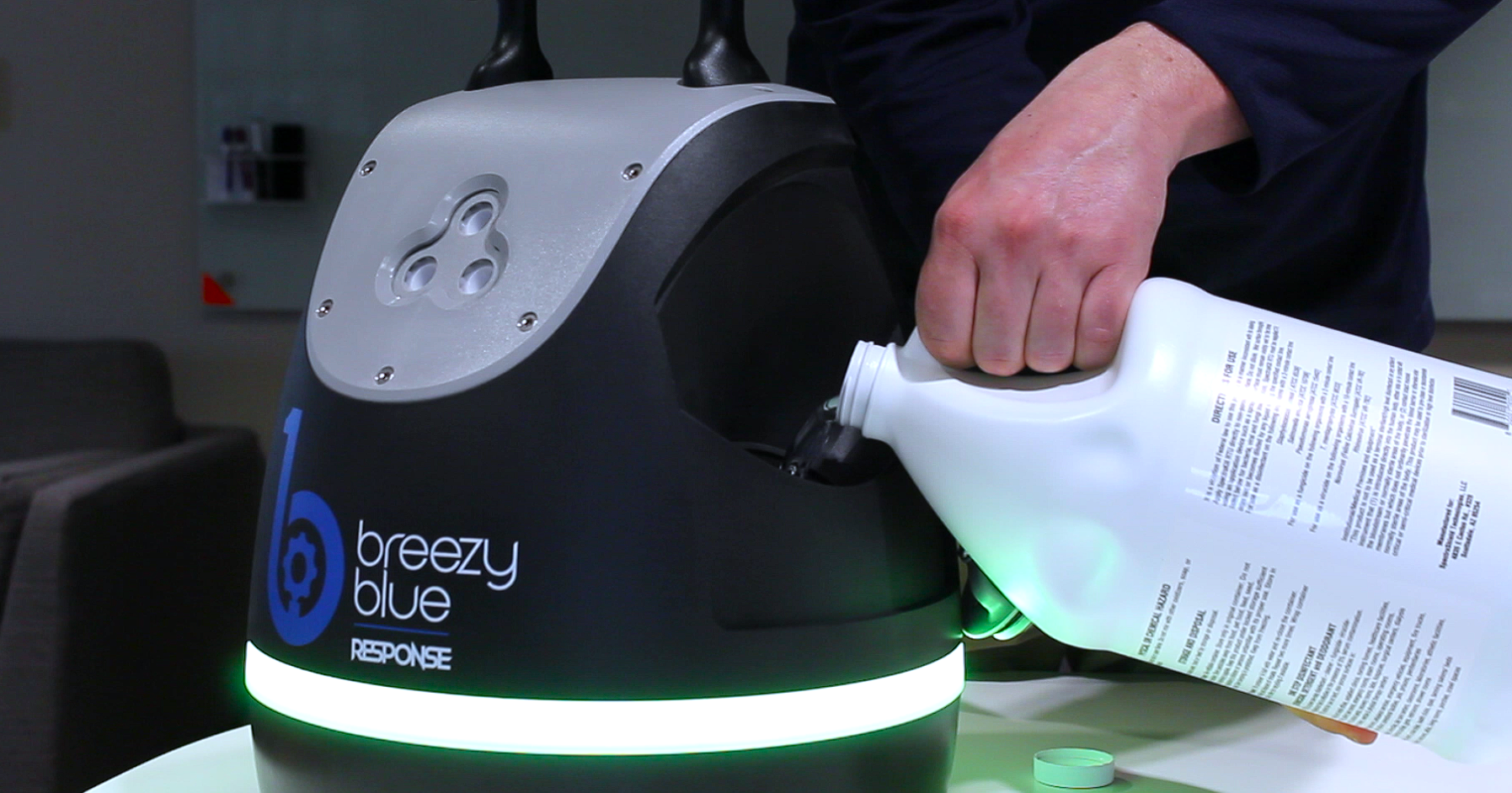
Disinfectant solutions: Breezy Blue® uses Breezy-approved chemical solutions, including an EPA-registered hydrogen peroxide disinfectant for hospital applications and Breezy BioPure™ for cleaning and deodorizing. Our EPA-registered disinfectant has undergone independent laboratory testing against a range of bacteria, viruses, and fungi.
Automated application: Breezy Blue® delivers aerosolized hydrogen peroxide through an automated whole-room disinfection system designed to supplement manual cleaning. Configurable treatment protocols help standardize application while minimizing hands-on labor.
Monitoring and documentation: Breezy Cloud™ automatically records treatment activity, providing centralized visibility into system usage and treatment history. Breezy Trace™ adds hydrogen peroxide exposure monitoring to help assess treatment conditions and support quality assurance.
Together, these components help hospitals implement, monitor, and document supplemental environmental disinfection within existing workflows.
Continue reading Part 2 to learn more about various methods used to test disinfectants for efficacy in real-world settings.
Part 1: Why Real-World Efficacy Testing is Needed
Part 2: Five Methods of Testing Disinfection Efficacy in the Real World
Part 3: Testing Aerosolized Hydrogen Peroxide Disinfection Efficacy in Real World Conditions