A New Approach to Hydrogen Peroxide Room Disinfection
Supplemental disinfection is increasingly expected in hospital workflows, particularly for isolation rooms, MDRO protocols, and high-risk discharges that require more robust and reliable methods than can be achieved by manual cleaning alone.
Hydrogen peroxide systems are widely used in hospitals—for example, in equipment reprocessing cabinets—because they are highly effective, achieving high levels of pathogen reduction across a broad range of organisms. As hospitals look to expand their use into whole-room applications, however, operational constraints become more apparent.
Historically, longer cycle times and workflow complexity have limited the practical use of hydrogen peroxide for room disinfection. Failure to fit the pace and realities of hospital operations have prevented this highly effective method of disinfection from being deployed more broadly.
Where Legacy Hydrogen Peroxide Systems Break Down in Practice
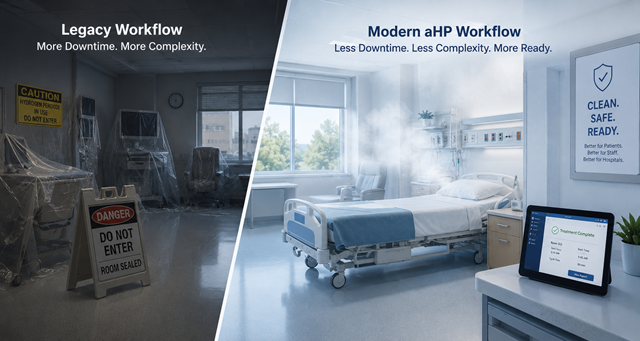
In theory, supplemental disinfection is straightforward. In practice, legacy hydrogen peroxide systems—particularly vapor-based and slow-cycle aerosol approaches—often introduce operational friction:
-
Room sealing requirements to maintain concentration
-
Longer treatment and aeration cycles that delay room turnover and limit use in high-throughput environments
-
Potential for hydrogen peroxide leakage during extended cycles, introducing safety and exposure concerns
-
Setup variability that leads to inconsistent execution
-
Workarounds when workflows are too complex to repeat consistently
The result is a gap between environmental disinfection goals and what is consistently achievable on the floor. This is especially evident in high-throughput settings, where time pressure has been shown to compromise disinfection.
A Shift Toward Faster, More Practical, Safer Aerosolized Hydrogen Peroxide Systems
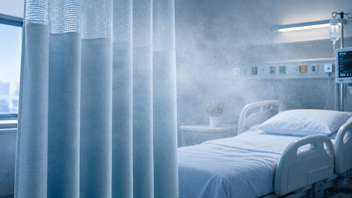
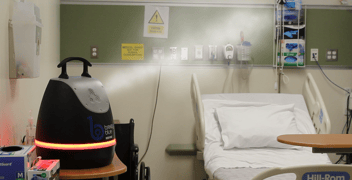
A new generation of aerosolized hydrogen peroxide systems is changing this dynamic. Rather than relying on slow dispersion or vapor-based approaches, these systems are designed to:
-
Rapidly distribute hydrogen peroxide throughout the room
-
Reduce or eliminate the need for room sealing
-
Shorten overall treatment and room turnover time
-
Minimize the potential for hydrogen peroxide leakage during treatment, supporting personnel safety
-
Support reliable, repeatable execution across staff and shifts
The goal is not different chemistry—all hydrogen peroxide systems rely on hydroxyl radical (·OH) formation—but innovation in delivery to improve safety, consistency, and usability in hospital workflows. This distinction is increasingly important (see full comparison).
Why Delivery Matters as Much as Efficacy
Hydrogen peroxide systems are often evaluated based on log reduction. While important, this alone does not determine real-world impact. Operational factors play a critical role:
-
How quickly the disinfectant reaches all surfaces
-
How long the room is out of service
-
How consistently staff can execute the protocol
Systems that take longer to achieve full-room coverage or require additional environmental controls can introduce delays and variability—particularly in high-throughput patient care settings.
By contrast, systems designed for rapid, contained aerosol dispersion can achieve effective coverage more quickly, supporting more consistent use within existing workflows and more reliable reduction of environmental pathogens.
Implications for Infection Prevention
With newer aerosolized hydrogen peroxide systems, supplemental disinfection can be more safely and practically integrated into routine room turnover workflows.
-
Reduced downtime supports patient flow and throughput
-
Simplified workflows improve consistency across staff and shifts
-
Shorter, more contained cycles support safer operation
-
More consistent execution strengthens overall program effectiveness
This enables hydrogen peroxide disinfection to move from a periodic intervention to a more routine, scalable part of infection prevention practice.
A Practical Next Step
As hospitals evaluate disinfection technologies, it can be helpful to look beyond efficacy alone and consider how a system performs within your specific environment. We’ve outlined a more detailed comparison of hydrogen peroxide modalities—including dispersion dynamics, workflow implications, and formulation differences—here:
→ Explore Breezy vs. Legacy Hydrogen Peroxide Systems
For teams assessing implementation, we also offer site-specific evaluations to help determine how automated aerosolized hydrogen peroxide disinfection can fit within existing workflows, room types, and budget considerations.
→ Request a Demo or Site Evaluation
The Bottom Line
Hydrogen peroxide systems are proven and widely used in hospitals, but most often in controlled applications where workflow constraints are minimal.
In whole-room disinfection, longer cycles and operational complexity have limited consistent use.
The next step is not different chemistry, but delivery systems that enable reliable, repeatable disinfection within real hospital workflows—which is where newer aerosolized approaches, such as Breezy Blue, are beginning to change how supplemental disinfection is implemented.