Advancing Real-World Evidence in Hospital Disinfection
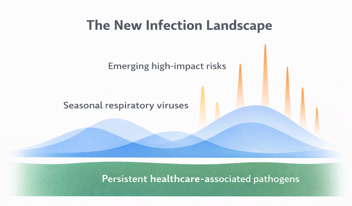
Healthcare-associated infections (HAIs) remain a persistent challenge for hospitals, despite continued advances in cleaning protocols and disinfection technologies. While new approaches are often introduced, clinical evidence—particularly in real-world hospital environments—can lag behind adoption.
This gap presents a challenge for infection prevention leaders and hospital administrators alike. Decisions around disinfection methods are often made with limited comparative data on efficacy, workflow impact, and long-term outcomes.
The Need for Real-World Clinical Evidence
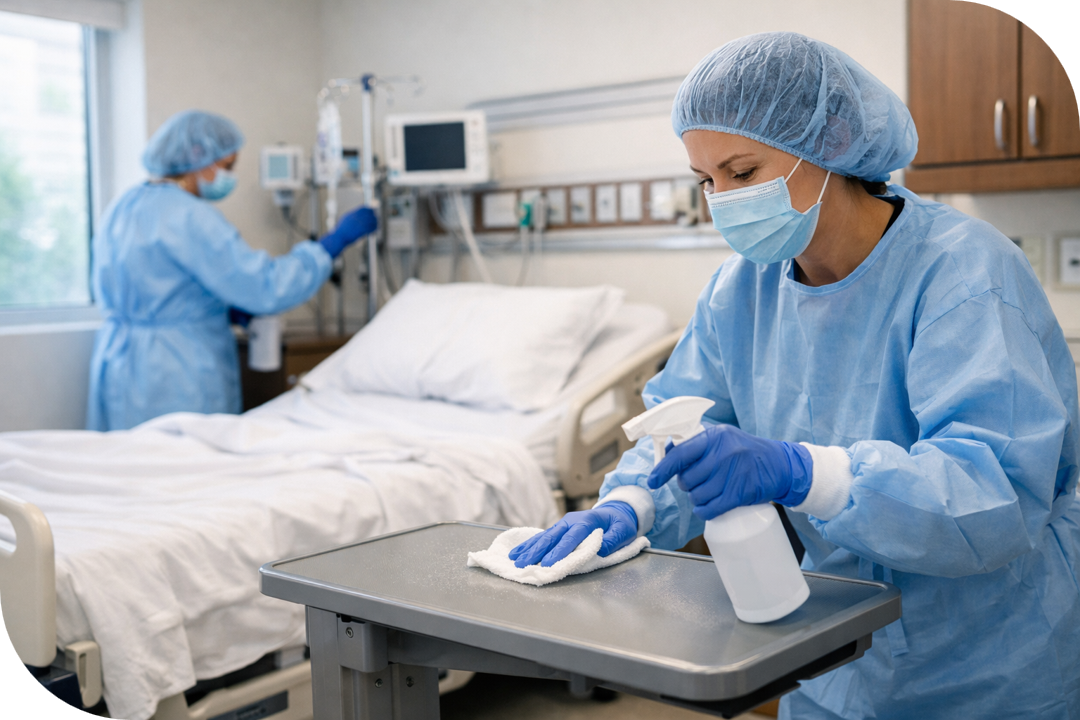
Traditional disinfection methods, including manual cleaning and adjunct technologies, can vary widely in consistency and performance depending on workflow, staffing, and environmental complexity. As a result, understanding how these methods perform in actual clinical settings is critical.
Real-world evidence helps answer key questions:
-
How effective is a disinfection method across all room surfaces and conditions?
-
Does it reduce variability in terminal cleaning?
-
What is the impact on staff workload and room turnover?
-
Can outcomes be measured, tracked, and improved over time?
While laboratory and controlled studies are important, hospitals increasingly need practical, operational data that reflects everyday use.
A Growing Body of Clinical Research
Aerosolized hydrogen peroxide has been studied as a whole-room disinfection method for many years, with published research demonstrating reductions in environmental contamination and infection risk.
Recent work has expanded into automated, dry-fogging systems that aim to improve consistency, coverage, and ease of use. Clinical and pre-clinical studies have shown:
-
High-level microbial reduction across surfaces, including difficult-to-clean areas
-
Reduction in environmental bioburden associated with multidrug-resistant organisms (MDROs)
-
Improved consistency compared to manual processes
-
Measurable gains in workflow efficiency and reduced labor burden
Peer-reviewed publications and conference presentations continue to build this evidence base, including recent work presented at leading infection prevention forums.
Expanding Clinical Collaboration
To accelerate the development of real-world evidence, Breezy Med has launched a Clinical Evidence & Research Network in collaboration with infection prevention leaders and hospital teams.
This effort is focused on generating practical, publishable data across a range of applications, including:
-
Terminal cleaning workflows
-
Privacy curtain disinfection
-
MDRO and emerging pathogen control (including Candida auris)
-
Operational and economic outcomes
Participating hospitals contribute access to their clinical environments and operational data, while Breezy Med manages study design, data analysis, and manuscript development. This model enables meaningful research with minimal additional burden on clinical staff.
Supporting Infection Prevention Through Evidence
As hospitals continue to balance infection prevention, operational efficiency, and staff workload, the need for data-driven decision-making will only increase.
Collaborative clinical research offers a path forward—combining real-world validation with practical implementation insights.
For infection prevention leaders interested in contributing to this growing body of evidence, or participating as co-authors on upcoming studies, additional details are available here: