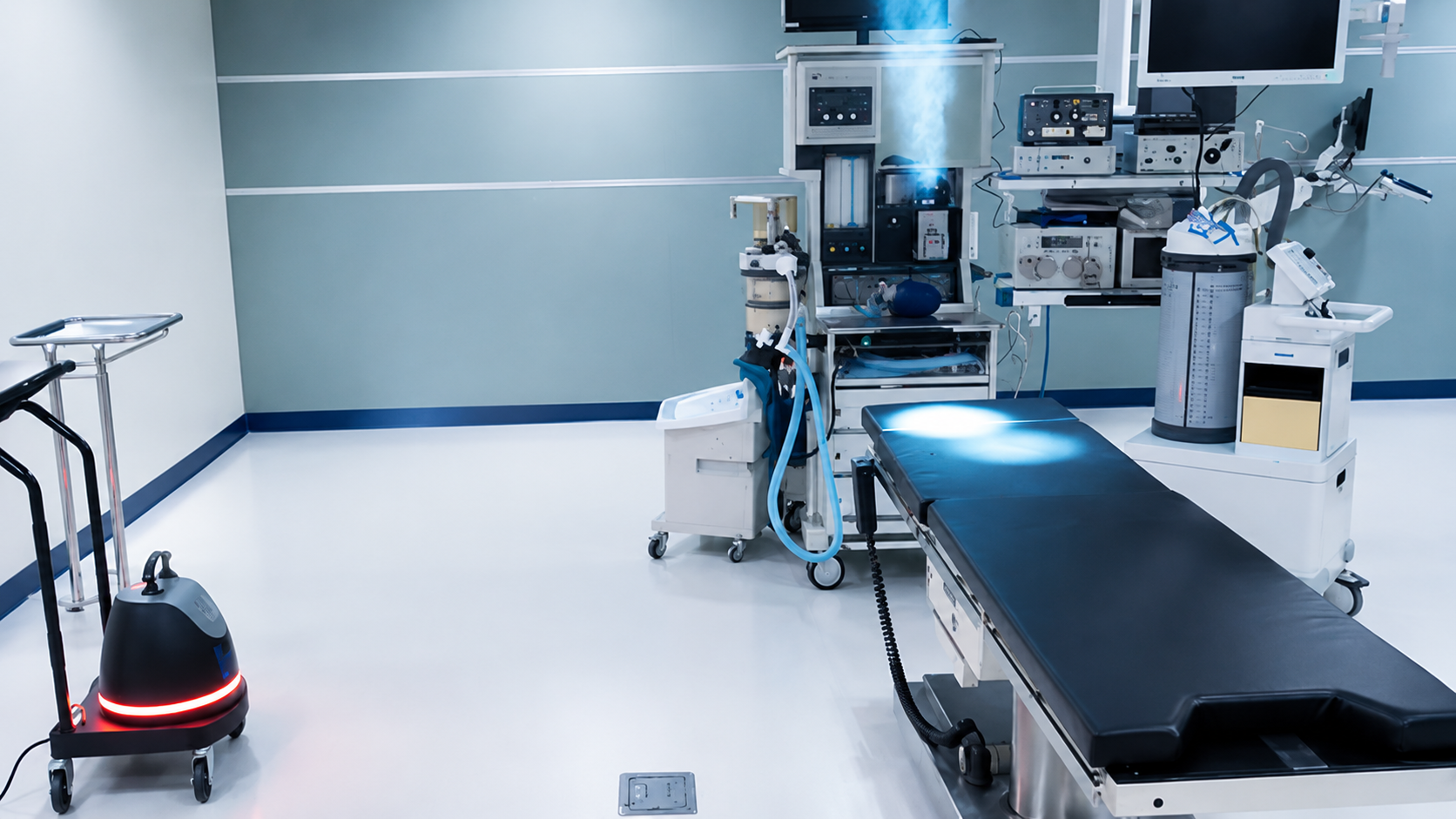
Hospitals today face increasing pressure to maintain consistent, documented infection prevention workflows across patient rooms, surgical suites, isolation areas, and other high-risk clinical environments. While The Joint Commission (TJC) does not mandate a specific disinfection modality, its standards place significant emphasis on environmental hygiene, documentation, and risk-based operational oversight.
As healthcare organizations respond to multidrug-resistant organisms (MDROs) and other organisms of concern, hospitals increasingly need environmental disinfection processes that are robust, measurable, and documented to demonstrate operational reliability and accountability across the facility. This is particularly relevant as healthcare systems face growing pressure to improve disinfection efficacy, workflow consistency, and operational responsiveness.
What The Joint Commission Evaluates
Environmental hygiene and evidence-based disinfection practices are important components of TJC’s Infection Prevention and Control (IPC) Standards [1][2]. Surveyors commonly audit:
-
Infection prevention policies and procedures
-
Environmental cleaning workflows
-
Documentation and auditability [3]
-
Risk-based infection prevention strategies
-
Staff training and process consistency
-
Surveillance and reporting capabilities
-
Preparedness for special pathogens and outbreak response
The Validation Gap in Environmental Cleaning
One of the largest operational challenges in infection prevention is not necessarily whether disinfection occurs — it is whether hospitals can consistently validate and track what occurred, where it occurred, and whether protocols were followed correctly.
Environmental services teams often operate under significant time pressure, particularly during discharge turnover workflows, isolation room cleaning, and surgical suite preparation. In many facilities, supplemental disinfection workflows rely on manual logs, fragmented reporting processes, or undocumented staff actions. This creates operational blind spots that become difficult to audit, trend, or improve over time.
The challenge can also extend to automated disinfection technologies. Many UV systems document cycle completion without measuring dose distribution throughout the room. A cycle may be completed without delivering a dose that provides the expected log reduction. Because these systems often require multiple placements to reduce line-of-sight limitations, workflow omissions can occur when staff are pressed for time between room turnovers. Documenting that a cycle was completed may not fully demonstrate that sufficient dosage was achieved throughout the space, particularly when multiple cycles or placements are required.
As infection prevention programs increasingly incorporate disinfection technology, it becomes increasingly important that these systems provide evidence of consistent, effective performance.
The Growing Importance of Audit-Ready Reporting
As part of the IPC survey process, TJC surveyors may evaluate environmental disinfection documentation, workflow consistency, and evidence of infection prevention oversight. TJC encourages continuous readiness, a proactive approach to compliance that integrates requirements into standard, everyday workflows. Standardizing and automating workflows and documentation provide a means to increase both disinfection reliability and survey readiness systemwide.
For example, Breezy Med's Breezy Cloud™ digital reporting platform enables infection prevention teams to move beyond paper logs and fragmented records by providing:
-
Room-level disinfection history
-
Automated fog logs and timestamps
-
Protocol tracking
-
Disinfectant usage reporting
-
Dashboard-based trend analysis
-
Multi-site operational visibility
-
Audit-ready reporting for internal reviews and TJC survey requirements [4]
These tools may also help identify workflow gaps, training opportunities, or inconsistent protocol execution across departments and facilities. For infection prevention leaders, the long-term value extends beyond survey readiness alone. Data-driven operational visibility can support stronger staff training, more consistent workflows, and better process oversight across the organization.
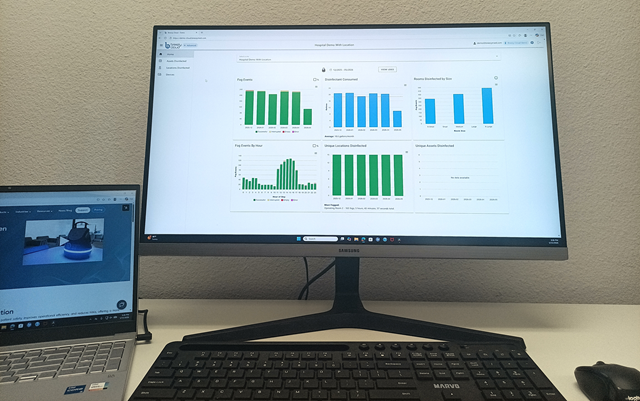
Figure 1) Platforms like Breezy Cloud™ help hospitals improve visibility into supplemental disinfection workflows through centralized dashboards, reporting, and audit-ready records.
Moving Beyond Audit Readiness
Audit readiness is important, but it is not the ultimate goal of infection prevention programs. The larger opportunity is creating more consistent, data-driven environmental hygiene programs that improve operational visibility, staff training, process oversight, and long-term infection prevention outcomes. Hospitals that can standardize supplemental disinfection workflows, validate protocols, and maintain reliable operational records are better positioned to continuously improve over time — not simply prepare for surveys.
As healthcare environments continue to evolve, infection prevention programs are increasingly shifting toward measurable, accountable, and operationally consistent systems designed to reduce variability and support safer patient care environments.
Learn more about how Breezy Cloud™ helps hospitals standardize, document, and report supplemental disinfection workflows across healthcare environments.