
Improving School Health Without Disrupting the School Day
Maintaining a clean environment in schools has always been important—but expectations have shifted. Today, administrators, preschool operators, and maintenance teams are being asked to do more: reduce illness spread, support attendance, and maintain confidence among staff and families.
Routine cleaning remains essential. But many are now asking a practical question:
How do you add a consistent layer of disinfection—without adding time, complexity, or disruption?
A recent deployment at Okoboji Community Schools in Iowa offers a clear example of how this can be done in a real-world setting.
Building on Existing Cleaning Practices
Okoboji Community Schools serves approximately 1,213 students across three schools (PK–12). Like many districts, their custodial team already maintained strong daily cleaning routines across classrooms, shared spaces, and athletic facilities.
The goal was not to replace those workflows—but to add a consistent, whole-room disinfection layer that could be applied efficiently across the district.
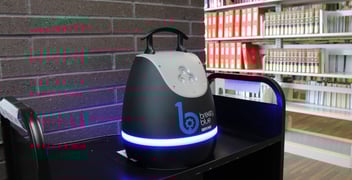
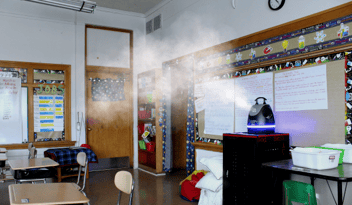
Beginning in the 2024–2025 school year, the district implemented two Breezy Blue automated disinfection systems designed to treat entire rooms at once.
Whole-School Coverage on a Practical Timeline
One of the most immediate benefits was the ability to disinfect large areas quickly without disrupting normal operations.
-
A middle school with 30 classrooms plus shared spaces can be disinfected in approximately 2.5 hours
-
The entire district was disinfected in under 6 hours in a single day
As noted by Maintenance Director Derek Chappas:
“Just yesterday we disinfected our whole district during a Professional Development day. We completed this task in just under 6 hours… My custodial staff is very impressed with how easy the whole process was.”
This kind of efficiency is critical for schools and preschools, where time windows are limited and cleaning must fit around tight schedules. The Okoboji deployment provides a detailed, real-world example of how schools can implement consistent, whole-room disinfection across classrooms and shared spaces.
👉 Download the full Okoboji Community Schools case study
Supporting Health in High-Risk Areas
Athletic spaces—particularly locker rooms—present unique challenges. Close contact, shared equipment, and warm, humid conditions can contribute to the spread of common pathogens such as:
-
Staphylococcus aureus (staph)
-
Dermatophytes (ringworm)
-
Other contact-transmitted skin infections
At Okoboji, these types of infections had occurred occasionally in wrestling environments prior to implementation. After introducing whole-room disinfection into their routine:
-
No recurrence of prior wrestling-related skin infections has been reported
-
Post-practice and post-event cleaning workflows became simpler and more consistent
This is a meaningful outcome not just for athletics, but for any environment where children share space and surfaces throughout the day.
A Noticeable Impact on Absenteeism
Beyond specific use cases like athletics, the district also observed broader health benefits:
-
Reduced illness-related absences among students and staff
-
Increased confidence in the cleanliness of school environments
Chappas noted that the system has helped provide “peace of mind for everyone in our community.”
For preschools and early education environments—where illness-related disruptions can be especially challenging—this type of outcome is particularly relevant.
Designed for Real-World School Operations
Adoption often comes down to whether a solution can fit within existing workflows. In this case, the ease of use of Breezy Blue was a key factor:
-
The process was described as simple for custodial staff to implement
-
Large areas could be treated without requiring manual surface-by-surface cleaning
-
The system integrated into existing cleaning schedules rather than disrupting them
This approach supports custodial teams by adding consistent disinfection without increasing manual workload. As Chappas summarized:
“We can disinfect our middle school—including 30 classrooms and shared spaces—in about 2.5 hours without disrupting the school day… It’s simple to use and gives our staff and community added confidence.”
What This Means for Schools and Maintenance Teams
For school leaders, preschool owners, and maintenance teams, the takeaway is straightforward:
-
Routine cleaning remains the foundation
-
Adding a consistent, whole-room disinfection layer can reduce illness-related absences and limit the spread of infections
-
The right approach must be fast, simple, and scalable across multiple spaces
This is especially important in environments where:
-
Children spend extended time indoors
-
High-touch surfaces are shared frequently
-
Illness spread can quickly impact attendance and operations
Download the Case Study
The Okoboji deployment provides a detailed, real-world example of how schools can enhance cleaning protocols without adding complexity.
👉 Download the full Okoboji Community Schools case study to see the complete results and how the district implemented Breezy Blue across its facilities.
.png?width=352&name=germ%20hotspots%20and%20illness%20prevention%20(2).png)