
Breezy vs. Legacy H2O2
Breezy vs. Legacy Hydrogen Peroxide Systems
High-level disinfection, built for real hospital workflows
Hydrogen peroxide (H₂O₂) systems are widely used because they work. When applied correctly, all H₂O₂ technologies can achieve strong pathogen reduction. This efficacy is driven by the generation of hydroxyl radicals (·OH), which disrupt proteins, lipids, and cell membranes, leading to microbial inactivation.
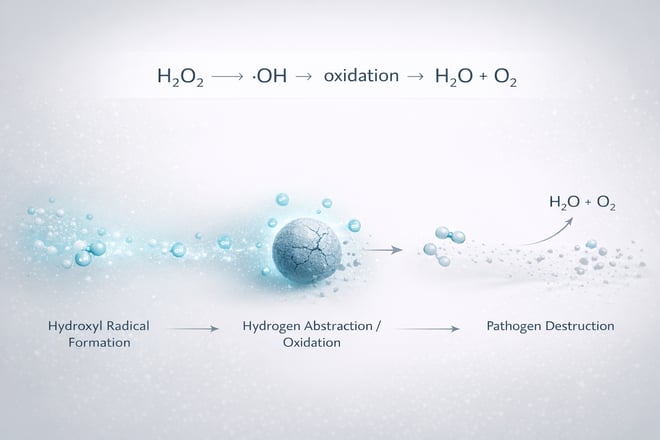
Figure 1: Mechanism of Action of Aerosolized Hydrogen Peroxide
Breezy Blue®'s difference is operational: speed, simplicity, and consistency in real hospital use.
Breezy’s aerosolized hydrogen peroxide is designed to deliver the same high-level disinfection with faster cycles, simpler workflows, and reliable whole-room coverage.
The Role of Aerosol Dynamics in Aerosolized H₂O₂ Disinfection
-
High concentration of droplets under 10 microns support broad dispersion throughout the room
-
High airflow and aerosol output increase droplet delivery over a short treatment interval
-
Increased droplet density improves the probability of surface interaction across an entire space
-
Achieve more uniform room-wide dispersion in less time
-
Reduce localized droplet accumulation near the source
-
Shorten treatment cycles and simplify operational workflow
The Importance of Droplet Dynamics in Hydrogen Peroxide Disinfection
Not all aerosolized hydrogen peroxide systems generate and distribute disinfectant in the same way. One of the most important differences lies in droplet size and airflow dynamics, which directly influence room coverage, treatment time, and disinfection consistency.
Breezy’s novel aerosolized hydrogen peroxide technology rapidly disperses a dense cloud of micron-sized hydrogen peroxide droplets using high-velocity airflow. These droplets are carefully engineered to be small enough to remain lofted and travel throughout the room, yet large enough to persist long enough for broad spatial dispersion before evaporating.
As these droplets disperse and evaporate, they generate highly reactive oxygen species—including short-lived hydroxyl radicals—that contribute to microbial inactivation. Because these reactive species typically persist only for microseconds to milliseconds, where evaporation occurs matters.
Breezy’s rapid whole-room dispersion is designed so droplet evaporation—and the resulting burst of reactive chemistry—occurs broadly throughout the treatment space rather than being concentrated near the source. This helps create more uniform exposure across high-touch and difficult-to-reach surfaces.
By contrast, many legacy hydrogen peroxide systems rely on slower aerosol generation and lower airflow. Slower dispersion can lead to more localized droplet accumulation and evaporation, producing less uniform reactive species distribution, longer treatment cycles, and greater operational complexity for room containment and aeration.
The result is a fundamental design difference: Breezy prioritizes rapid room-wide dispersion before evaporation, helping achieve fast, consistent whole-room disinfection with shorter cycle times and simpler workflow integration.
Operational Implications
Compared to vapor and slow-cycle hydrogen peroxide systems, Breezy aerosolized hydrogen peroxide enables more rapid room coverage, reduced reliance on room sealing, and shorter overall treatment cycles. These differences support more consistent implementation within routine hospital workflows, with lower variability and reduced downtime between uses.
| Feature | Breezy Aerosolized H₂O₂ |
Vapor / Slow-Cycle H₂O₂ |
| Total treatment Time | 15 minutes | Up to many hours |
| Room sealing | Not typically required | Often required |
| Humidity / Condensation | Low due to short cycles | Moderate-to-high during long treatments |
| Workflow | Simple, repeatable | More complex |
| Coverage | Rapid, whole-room | Slower, sealing-dependent |
The Bottom Line
Distinction Between Aerosolized Hydrogen Peroxide and AHP Terminology
The term AHP can refer to accelerated hydrogen peroxide (hydrogen peroxide with added chemicals such as surfactants or organic acids). These additives can introduce residue or material compatibility concerns and are generally unnecessary in aerosolized systems, where micron-scale droplets increase surface area and facilitate hydroxyl radical (·OH) generation.
-
Pure hydrogen peroxide formulation
-
No added accelerants associated with irritation or material incompatibility
-
Decomposes into water and oxygen, leaving no residues
Scientific Background
Modeled Droplet Dispersion and Rapid Room Coverage
In computational fluid dynamics modeling of a standard hospital room, aerosolized hydrogen peroxide droplets achieved full-room surface coverage within 1 minute of dispersion. The simulation in Figure 1 demonstrates how Breezy’s high-output aerosol rapidly distributes throughout the space, supporting consistent, whole-room disinfection.
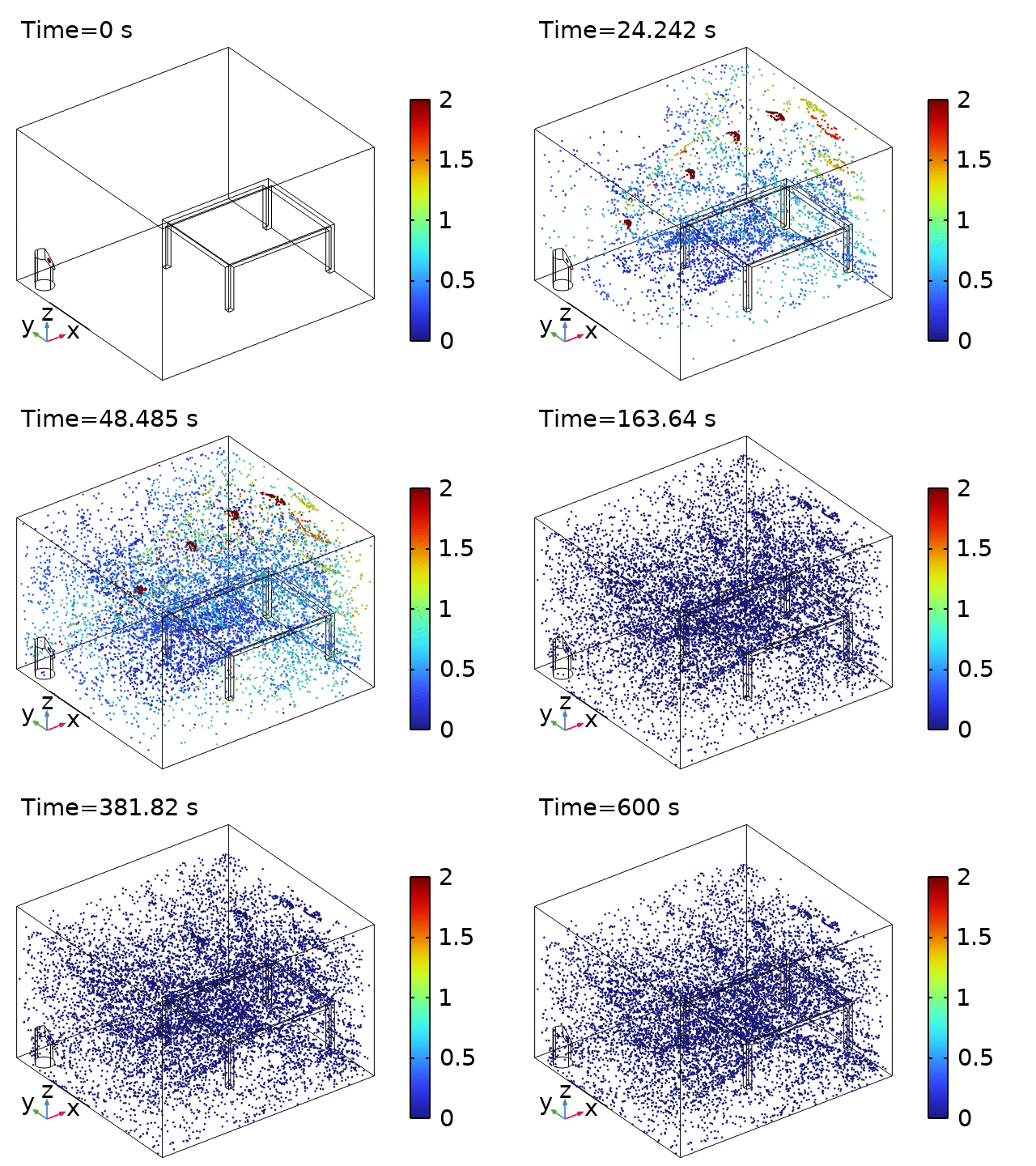
Figure 2: Computational fluid dynamics model of Breezy's droplet dispersion
Clinical Evidence and Research Network
This work includes:
-
Peer-reviewed publications and clinical protocols
-
Hospital-based studies on MDRO transmission reduction
-
Preclinical testing across emerging pathogens, including Candida auris
-
Ongoing collaboration with infection prevention professionals across multiple care settings
Together, these efforts provide a foundation of clinical validation, practical implementation, and continuous improvement. Explore our Clinical Evidence and Research Network.